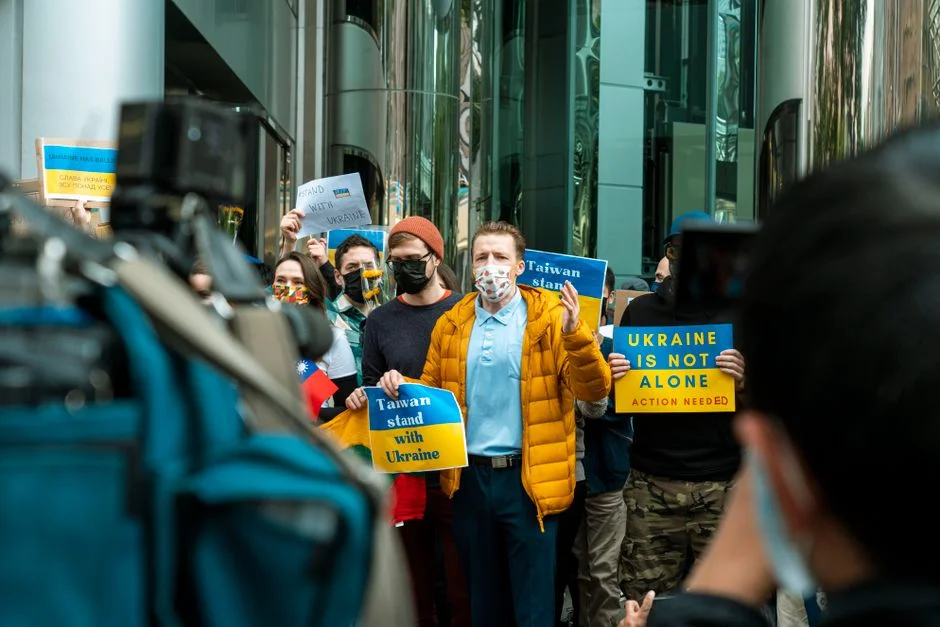
Vladimir Putin has declared that the war in Ukraine is "coming to a close," a statement that has sent ripples through global financial markets and prompted immediate reassessment of risk by investors in London, New York, and Frankfurt. The Russian President made the remarks during a televised address, suggesting that Moscow is preparing for a decisive final phase of the conflict rather than an indefinite stalemate. This announcement comes at a critical juncture for global supply chains, particularly as energy prices and commodity markets remain highly sensitive to geopolitical shifts on the Eastern European front.
Market Volatility and Investor Sentiment
The immediate reaction from financial markets was cautious rather than euphoric. Traders in London watched the FTSE 100 index with keen interest, noting that the initial dip in oil prices suggested a belief that Putin’s declaration might lead to a faster resolution. However, the lack of a concrete peace treaty means that volatility will likely persist in the Brent crude market, which had already stabilized around $80 per barrel before the announcement. Investors are now grappling with the uncertainty of whether this is a tactical maneuver or a strategic shift.
Analysts at major investment firms are advising clients to remain defensive. The divergence between political rhetoric and economic reality is a classic source of market inefficiency. If the war ends sooner than expected, European industrial producers could benefit from lower energy costs. Conversely, if the declaration proves premature, the sudden surge in defense spending and logistical demands could reignite inflationary pressures across the continent. The key for investors is to watch the bond markets, where yield curves are beginning to flatten in anticipation of a potential soft landing for the global economy.
Energy Sector Implications


The energy sector faces a complex set of variables following Putin’s statement. Russia remains a dominant player in the global gas and oil markets, and any shift in the intensity of the conflict directly impacts supply expectations. Natural gas prices in Europe, which have been the primary driver of inflation in the region, could see a correction if a ceasefire leads to the reopening of key pipeline routes. This would provide some relief to households and businesses that have been grappling with high utility bills for over two years.
However, the structural changes in the energy market mean that a return to pre-war prices is unlikely. Europe has accelerated its transition to renewable energy and diversified its supply sources, reducing its dependence on Russian gas. Companies in the North Sea and Norwegian offshore fields have already secured long-term contracts that may now face renegotiation pressures. Investors in the energy sector must evaluate whether Putin’s declaration signals a temporary dip or a long-term trend in commodity pricing.
Impact on European Gas Prices
European gas futures have shown mixed signals, with some traders betting on a sustained drop while others remain skeptical. The National Grid in the UK has noted that storage levels are healthier than in previous winters, which could buffer against sudden supply shocks. If the war de-escalates, the TTF (Title Transfer Facility) hub in the Netherlands, which serves as the benchmark for European gas prices, could see a significant correction. This would directly affect the cost of living for millions of consumers and reduce the operational costs for energy-intensive industries such as manufacturing and chemicals.
Defense Industry and Supply Chains
The defense industry is another sector that stands to be significantly impacted by Putin’s announcement. Companies like BAE Systems and Rheinmetall have seen their stock prices surge due to increased government contracts and production lines running at full capacity. If the war concludes, the immediate demand for ammunition and artillery may slow, leading to a potential correction in defense stocks. However, the long-term strategic outlook for European defense spending remains robust, with many countries pledging to increase their budgets to 2% of GDP.
Supply chain disruptions in Eastern Europe have also affected various industries, from automotive to agriculture. A resolution to the conflict could ease logistical bottlenecks, allowing for smoother trade flows through key ports in Odessa and Black Sea regions. Businesses that have diversified their supply chains to mitigate risk may now face the challenge of optimizing costs. Investors should monitor the performance of logistics companies and freight forwarders, as they are often the first to react to changes in trade volume and efficiency.
Economic Data and Inflation Pressures
Global inflation rates have been stubbornly high, with energy and food prices playing a crucial role. A resolution to the war could help central banks in the UK and the Eurozone achieve their inflation targets more quickly. The Bank of England has closely monitored the geopolitical situation, noting that a prolonged conflict adds uncertainty to their monetary policy decisions. If Putin’s declaration leads to a tangible reduction in tensions, the path to interest rate cuts could become clearer, providing a boost to mortgage holders and borrowers.
However, the economic damage inflicted over the past two years is substantial. Rebuilding efforts in Ukraine will require significant financial resources, potentially leading to new bonds and fiscal measures. This could increase the global debt burden and influence interest rates in the long term. Investors need to consider the fiscal implications of post-war reconstruction, which could drive demand for infrastructure and construction companies. The World Bank has already estimated that the cost of rebuilding Ukraine could exceed $400 billion, creating new investment opportunities in the region.
Geopolitical Risk and Currency Fluctuations
Currency markets are also reacting to the news, with the Russian Ruble showing signs of stabilization and the Euro gaining slight ground against the Dollar. The geopolitical risk premium embedded in various asset classes may begin to unwind if the conflict de-escalates. This could lead to a flight to quality, benefiting safe-haven assets like gold and government bonds. However, the uncertainty surrounding the terms of any potential peace agreement means that currency volatility will likely persist in the short term.
Emerging markets, which have been heavily influenced by the war’s impact on commodity prices, could see a shift in capital flows. Countries that have benefited from higher energy exports may face pressure if prices drop. Investors in emerging market funds should monitor the economic policies of key exporters like Russia, Brazil, and India, as their central banks may adjust their monetary stances in response to changing global conditions. The interplay between geopolitical stability and economic performance will be a critical factor for portfolio managers in the coming months.
Business Strategy and Corporate Planning
Corporations are beginning to adjust their strategic plans in light of Putin’s declaration. Companies with significant exposure to the Russian and Ukrainian markets are reassessing their risk profiles and supply chain dependencies. The uncertainty has forced many businesses to adopt a more agile approach, with a focus on diversification and resilience. This shift in corporate strategy could lead to changes in capital expenditure and investment priorities, influencing the broader economic landscape.
Small and medium-sized enterprises (SMEs) are also feeling the impact, particularly in sectors such as logistics, manufacturing, and retail. The potential for a faster resolution offers hope for stabilized costs and improved consumer confidence. However, businesses must remain cautious, as the transition from a wartime economy to a peacetime economy can be complex and fraught with challenges. Investors should look for companies that have demonstrated strong risk management practices and the ability to adapt to changing market conditions.
What to Watch Next
The coming weeks will be critical in determining the validity of Putin’s declaration. Investors and businesses should closely monitor diplomatic developments, particularly any announcements regarding ceasefire agreements or peace talks. The movement of troops and the status of key strategic locations will provide tangible indicators of the war’s trajectory. Additionally, central bank announcements and inflation data will offer insights into how the economic landscape is evolving in response to the geopolitical shifts. Keeping a close eye on these factors will be essential for making informed investment and business decisions in the months ahead.
See Also
- South Africa Storms Trigger Market Volatility and Supply Chain Shocks
- Israel Declares 'Huge Opportunity' for UAE Trade Expansion as War Reshapes Alliances
Emerging markets, which have been heavily influenced by the war’s impact on commodity prices, could see a shift in capital flows. Investors in emerging market funds should monitor the economic policies of key exporters like Russia, Brazil, and India, as their central banks may adjust their monetary stances in response to changing global conditions.