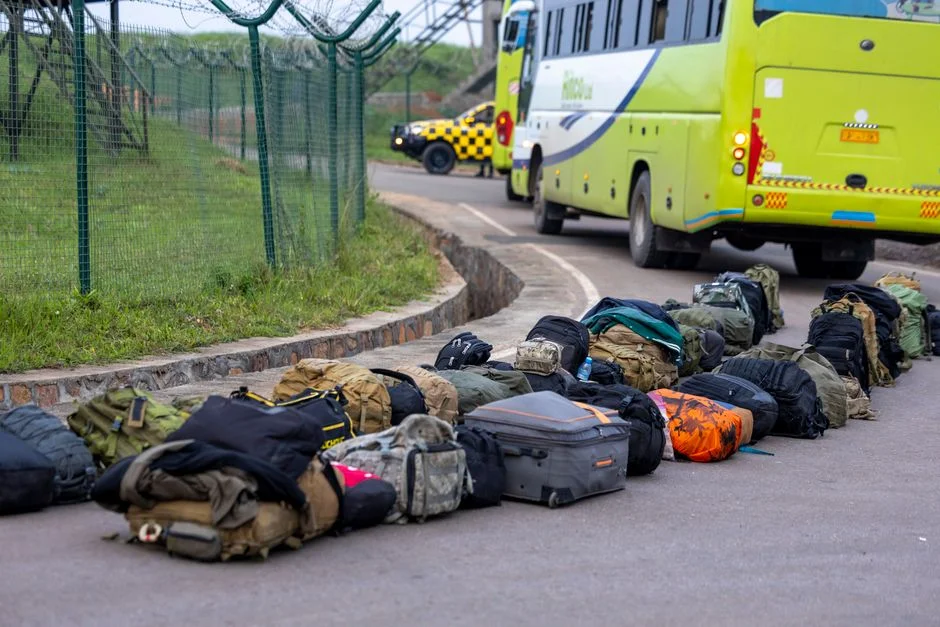
The number of violent attacks targeting schools, pupils and staff worldwide jumped by 40% last year, according to a major study released this week, painting a grim picture of how armed conflict continues to derail education and, with it, long-term economic stability in fragile states.
Rising tide of school violence spans multiple continents
Researchers documented attacks across more than a dozen countries, with Haiti, Ethiopia, the Democratic Republic of Congo, and the Palestinian territories among the most severely affected. The findings, compiled by a consortium of international organisations monitoring education in conflict zones, showed that the 40% increase represents the sharpest year-on-year rise recorded since monitoring began.
In Haiti, armed gangs have increasingly targeted schools as part of broader campaigns of intimidation, forcing entire neighbourhoods into lockdown. Parents in Port-au-Prince told local media that sending children to class had become a calculated risk. The capital city has seen dozens of institutions shuttered or occupied by armed groups this year alone.
Why this matters for economies and investors


The connection between education disruption and economic output is well established. The World Bank estimates that children who lose years of schooling face significantly reduced lifetime earnings, with knock-on effects on productivity, tax revenues, and social stability. When attacks on schools become routine, the human capital pipeline that economies depend upon starts to fracture.
For businesses eyeing expansion in emerging markets, the data signals a warning. Countries experiencing sustained violence against educational infrastructure often see investor confidence erode over time. Insurance costs rise, talent flight accelerates, and the pool of skilled local workers shrinks. In short, what begins as a humanitarian crisis frequently evolves into a commercial one.
Insurance and operational costs climb
Multinational companies operating in regions flagged by the study reported higher security expenditures and difficulties retaining expatriate staff. Some firms have quietly shifted operations to more stable neighbouring countries, a pattern that compounds the economic damage in already vulnerable states.
Humanitarian organisations sound alarm
UNICEF, which contributed data to the study, called the findings a wake-up call. The agency pointed out that every school closed by violence represents not just a lost year for students but a future workforce diminished before it has even begun training. The organisation's director for emergency programmes noted that reconstruction costs rarely keep pace with the speed of destruction.
Non-governmental organisations working in affected areas say donor fatigue poses an additional threat. Funding for education in conflict settings has failed to match the scale of the problem, leaving programmes under-resourced precisely when they are needed most.
What comes next for affected regions
Governments in the countries named in the report face mounting pressure to demonstrate progress. Ethiopia's federal authorities have pledged new security arrangements around schools in conflict-affected provinces, though implementation remains inconsistent. In the Democratic Republic of Congo, regional governors have called for accelerated deployment of specialised police units to school zones.
The international community is expected to review its funding mechanisms for education in emergencies at a summit scheduled for early next year. Aid agencies are pushing for guaranteed multi-year commitments rather than short-term grants that leave programmes vulnerable to sudden withdrawal.
Long-term consequences demand attention now
Economists tracking human development indicators warn that the damage accumulates silently. A generation denied education today translates into a smaller skilled labour force in fifteen years. For investors with long time horizons in affected regions, this is not an abstract risk. It is a quantifiable drag on future market size, consumer spending power, and operational capacity.
Markets in relatively stable neighbouring countries sometimes benefit from short-term capital inflows as firms relocate, but regional economists caution against viewing displacement as a substitute for addressing root causes. Without sustained intervention, the cycle of instability tends to widen rather than narrow.
The study's authors have indicated they will release country-by-country breakdowns in the coming weeks. That data will give policymakers and business leaders a clearer picture of where exposure is highest and where intervention offers the best return on investment in both human and financial terms. What happens in classrooms today will show up in economic data for decades.
See Also
- AI Hype Collides With Reality — UK Business Readiness Is Slipping
- Brazil’s World Cup Sticker Boom Triggers Rare Collector’s Rush