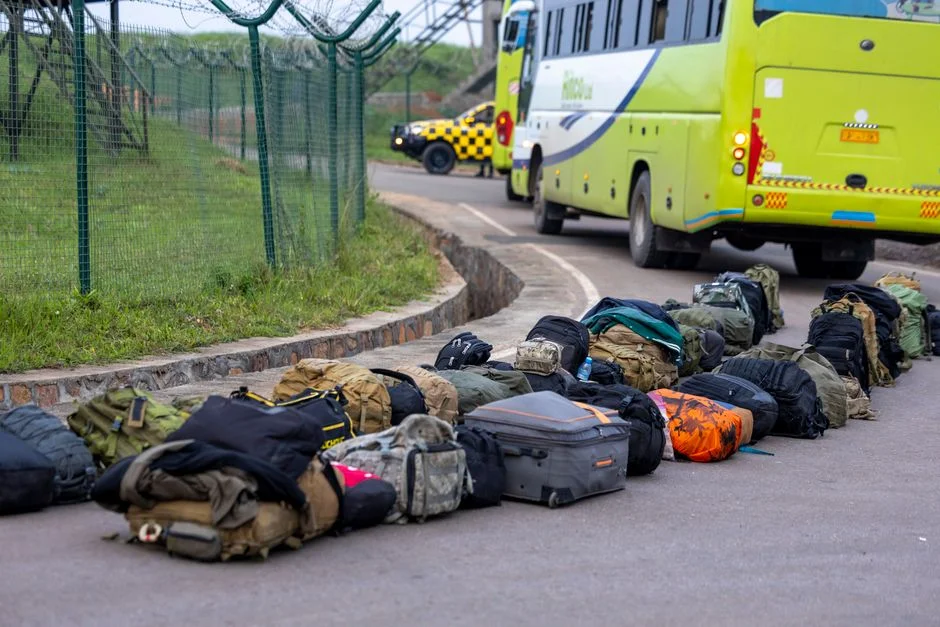
The Johannesburg Metropolitan Police Department confirmed on Tuesday that private security contractors will operate alongside regular police officers from 30 June, a move driven by rising concerns about street crime and its ripple effects on the city's commercial heart.
The decision places South Africa's economic capital at a crossroads between public safety priorities and the costs of supplementing law enforcement capacity. Retailers, property developers, and international investors have long cited crime as a drag on operating conditions in Johannesburg's central business district.
Security Gap Drives Policy Shift

Local authorities acknowledged that the existing police presence had struggled to cover high-footfall areas across Johannesburg, particularly near shopping corridors and transport hubs. The deployment of private security personnel represents an acknowledgment that the gap between demand and available uniformed officers has widened.
Figures from the South African Police Service show that commercial robbery cases in Gauteng province — where Johannesburg is situated — have placed pressure on insurers and forced some businesses to absorb higher security costs. The private sector has filled that void before, but never as part of an official joint operation with municipal police.
The arrangement raises questions about command structures. Private security firms typically answer to their clients, not to government authorities, which creates potential complications when officers from both sectors work side by side.
Business Costs Under Scrutiny

For companies operating in Johannesburg, the announcement lands amid ongoing conversations about the true price of doing business in the city. Commercial property owners have already invested heavily in perimeter fencing, CCTV networks, and on-site guards for office parks.
A survey published earlier this year by the South African Chamber of Commerce and Industry found that security expenses now rank among the top three operational concerns for small and medium enterprises in Gauteng. Some business owners argue that government-backed security improvements could reduce the competitive disadvantage faced by firms unable to afford private solutions.
The Johannesburg Development Agency, which manages public infrastructure in key urban zones, declined to comment on whether it would contribute funding to the expanded security deployment. Officials indicated that costs would be borne through existing municipal budgets, though the specifics remain unclear.
Insurance and Liability Questions
Underwriters are watching the arrangement closely. If private security personnel are involved in incidents — whether shootings, detentions, or accidents — questions arise about who bears legal responsibility. Standard commercial insurance policies typically do not cover actions by contracted security providers unless specifically included, which could expose businesses to unexpected liabilities.
Industry sources suggest that several major insurers have begun reviewing policy language related to joint police-private security operations. Any coverage gaps could translate into higher premiums for businesses located near deployment zones.
Investor Sentiment at a delicate Point
Foreign direct investment flows into South Africa have shown tentative signs of recovery following years of political uncertainty. Johannesburg remains the primary destination for multinational corporations establishing regional headquarters, but those decisions hinge on assessments of urban stability.
Rating agencies have previously flagged crime as a structural impediment to South Africa's growth potential. The involvement of private security in law enforcement duties could be read two ways: either as evidence that authorities are taking the problem seriously, or as a signal that the public police service is overstretched.
Currency markets showed limited reaction to the announcement, with the rand trading within recent ranges against major currencies. Market participants noted that the 30 June deployment date falls after a mid-year review period for several large institutional investors rebalancing portfolio allocations.
Labour Market Ripples
The private security industry in South Africa employs hundreds of thousands of workers, many of them in low-paid roles with limited training. Critics of the deployment argue that outsourcing law enforcement functions to this workforce without adequate oversight risks normalising a two-tier approach to public safety.
Unions representing municipal workers have raised concerns about whether private contractors will receive the same training and equipment as police officers. Without standardisation, the quality of interactions with the public could vary significantly between sectors.
The Private Security Industry Regulatory Authority, which oversees the sector, confirmed it had received inquiries from firms seeking clarification on rules governing joint operations with government police. A spokesperson said guidance would be issued before the 30 June start date.
Residents and Commuters React
Everyday users of Johannesburg's streets expressed a mixture of cautious optimism and scepticism. Commuters travelling through the city centre during peak hours have reported frequent incidents of theft and aggression, particularly near taxi ranks and railway stations.
Residents in previously underserved areas, where police patrols have been infrequent, said they welcomed any increase in visible security presence regardless of whether officers wore municipal or private uniforms. Others worried that private security might prioritise commercial zones over residential neighbourhoods.
The deployment plan covers several districts, though authorities have not published a detailed map of patrol areas. Officials promised that routes would be publicised once logistics were finalised.
What Comes Next
The 30 June date marks the beginning of a pilot phase that will run through September. Municipal authorities have committed to publishing monthly reports on incident statistics in deployment zones, which will serve as a baseline for judging effectiveness.
If the pilot succeeds, Johannesburg could expand the model to additional areas. Failure could reignite debate about resource allocation for the police service itself, potentially influencing budget discussions for the next fiscal year.
Businesses operating in affected areas should review their insurance coverage and consult with security advisors on how to coordinate with the new joint patrols. Investors with exposure to South African equities or property funds should monitor the quarterly data releases for signs of improvement — or deterioration — in urban safety metrics.
See Also
- Ryan Slams Podcast Gambling Ad Opt-Out as ‘Bonkers’ – Inflation Drops to 4.2%
- KFA Chief Begs Son Heung-min for Victory as Tottenham Waits on Pivotal Performance
Critics of the deployment argue that outsourcing law enforcement functions to this workforce without adequate oversight risks normalising a two-tier approach to public safety.Unions representing municipal workers have raised concerns about whether private contractors will receive the same training and equipment as police officers. The involvement of private security in law enforcement duties could be read two ways: either as evidence that authorities are taking the problem seriously, or as a signal that the public police service is overstretched.Currency markets showed limited reaction to the announcement, with the rand trading within recent ranges against major currencies.
What is the latest news about johannesburg calls in private security as crime pressures business confidence?
Why does this matter for politics?
What are the key facts about johannesburg calls in private security as crime pressures business confidence?