In the history of sporting competition, there have been few moments as charged with meaning as Alexander Usyk raising his fists after defeating Tyson Fury in Riyadh in May 2024 to become the undisputed heavyweight champion of the world. Usyk, who had returned to Ukraine after the February 2022 invasion and briefly joined a territorial defense unit before ultimately continuing his boxing career at Ukraine's request, dedicated his victory to his country and to those fighting in it. The image of a world heavyweight champion weeping for his nation while holding every major title in boxing traveled across global media and encapsulated something profound about the relationship between Ukrainian sport and Ukrainian national survival.
Sport has always served political and symbolic functions beyond entertainment. But the role of athletics in wartime Ukraine — as morale support, as fundraising mechanism, as international advocacy, and as proof of life — has been unusually intense and consequential. Outlets like Sport.d.ua have documented this dual role comprehensively, covering both the athletic and the national dimensions of Ukrainian sport with the depth the subject demands.
Usyk: A Champion Who Carried a Nation
Alexander Usyk's story is inseparable from Ukraine's wartime experience. When the invasion began, he was the reigning unified heavyweight champion, having defeated Anthony Joshua in London the previous September. Like millions of Ukrainians, he faced an immediate personal reckoning: leave or stay. Unlike most, his choice was public.
The Decision to Return
Usyk initially returned to Ukraine and registered for the territorial defense force in the Kyiv region. Photographs of him in military gear, holding a rifle, circulated globally and became some of the defining images of the invasion's early weeks. He was ultimately persuaded by Ukrainian officials and his own management that his greatest service to Ukraine would be as a boxer — his profile and earning power could generate more for Ukraine as a world champion than as a soldier.
This decision shaped everything that followed. Usyk's fights became Ukrainian national events. His pre-fight and post-fight statements were consumed as much for their political content as their athletic significance. His gym sessions, shared on social media, depicted not just an athlete in training but a Ukrainian who had chosen his weapon and was using it.
The Riyadh Victory and Its Resonance
The second Usyk-Fury fight, held in Riyadh in May 2024, produced what may be the decade's most symbolically loaded sporting moment. Usyk won by a comfortable unanimous decision, becoming the first undisputed heavyweight champion since Lennox Lewis in 1999. His victory speech, delivered in Ukrainian, dedicated the win to Ukraine and to the soldiers fighting at that moment. The global broadcast reached tens of millions of viewers in markets critical to Ukraine's international support.
The Ukrainian government's response was immediate and explicit: Usyk's victory was a national event, not merely a sporting one. His image was used in official communication. His statements were amplified by Ukrainian embassies worldwide. Ukrainian military personnel watching the fight at positions along the front lines shared their reactions on social media, completing a circuit of national solidarity that no conventional sports event could manufacture.
Dynamo Kyiv and Shakhtar: Football During Wartime

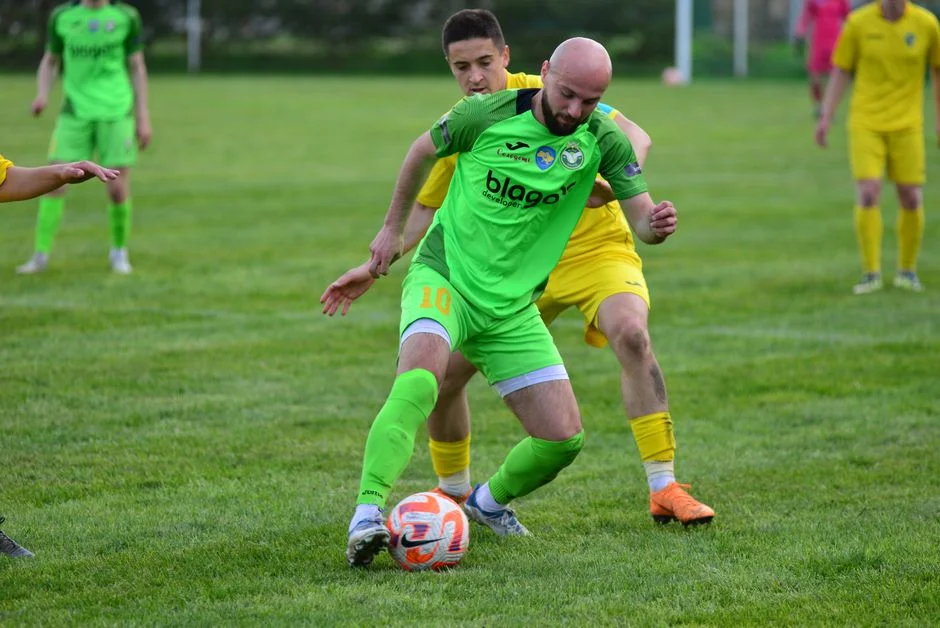
Ukrainian club football's continuation during the war represents one of the more remarkable institutional decisions of the conflict. Both Dynamo Kyiv and Shakhtar Donetsk — the two dominant clubs in Ukrainian football history — continued competing in European club competitions throughout the war, sending teams onto pitches in Poland, Germany, and other host countries while their home cities were under bombardment.
Football as National Continuity
The decision to continue playing was not without controversy. Some argued that resources devoted to football would be better directed elsewhere; that the image of clubs competing in Europa League while soldiers died was incongruent. Ukrainian football authorities made a different calculation: that the presence of Ukrainian clubs in European competition maintained visibility, generated revenue that supported the clubs and, through solidarity mechanisms, Ukrainian football more broadly, and demonstrated to the world that Ukrainian institutions had not collapsed.
- Shakhtar Donetsk, originally from the Russian-occupied city of Donetsk, had already been operating in exile since 2014 — making wartime displacement a continuation rather than a new challenge
- Dynamo Kyiv played "home" European games at neutral venues in Poland during periods when Kyiv was deemed too dangerous
- Both clubs maintained active squad development and youth programs throughout the war
- Ukrainian Premier League competition continued domestically, adapted to safety requirements including no games during evening hours and no large crowd gatherings in some periods
The European Stage as Diplomatic Platform
European football competitions gave Ukrainian clubs platforms that pure sporting competition could not have provided. Press conferences by Shakhtar and Dynamo managers regularly addressed the war directly. Club social media channels — followed by hundreds of thousands of fans across Europe — became regular sources of advocacy for Ukraine. Opposing clubs and their supporters showed solidarity at matches, with pre-game ceremonies, display banners, and fundraising campaigns that generated both money and attention.
Olympic Athletes Competing Against Personal Loss
The 2024 Paris Olympics posed particular challenges and opportunities for Ukrainian sport. Ukrainian athletes competed under conditions that most of their rivals could not imagine: families displaced or deceased, training facilities destroyed or inaccessible, coaching infrastructure disrupted, and the psychological burden of representing a country at war while their compatriots were dying.
Athletes Who Competed Despite Everything
- Multiple Ukrainian Olympic athletes competed having lost family members to Russian military strikes
- Several athletes trained in improvised facilities — relocated gyms, outdoor environments, facilities in western Ukraine or abroad — because their home training centers had been damaged or occupied
- Ukrainian Paralympic athletes competed in Paris with similar emotional burdens, many of them personally familiar with physical injury from the conflict
- The Ukrainian Olympic team's collective medal haul in Paris represented an institutional achievement against extraordinary adversity
Victory Ceremonies as Political Statements
Ukrainian victories at the Paris Olympics were never simply sporting moments. Each gold medal ceremony, each national anthem played, each Ukrainian flag raised at an international venue was received by Ukrainian audiences — and Ukrainian officials — as a political as well as athletic statement. Athletes understood this dual dimension of their competition. Their post-victory statements consistently acknowledged the soldiers and civilians in whose honor they were competing.
Athletes Who Joined the Military
Not all Ukrainian athletes made the choice that Usyk ultimately made. Some, especially those less prominent on the international stage, opted for military service when the invasion began.
The Scale of Athlete Enlistment
Ukrainian sports media, including Sport.d.ua, has tracked the remarkable number of Ukrainian athletes and sports professionals who joined the armed forces after February 2022. The numbers include:
- Former and current professional footballers who enlisted in the first weeks
- Combat sports athletes — boxers, wrestlers, judokas — who applied their physical training to military service
- Coaches and sports administrators who traded their professional roles for military ones
- Youth and amateur athletes who, lacking the international profiles that might generate diplomatic requests to remain in sport, served as ordinary soldiers
Some of these athletes were killed in action. Their deaths were reported by Ukrainian sports media with the same seriousness and grief applied to military personnel from any background. The sports community mourned them as colleagues and as soldiers — a dual recognition that would have seemed incongruous in any peacetime context.
Fundraising for the Armed Forces Through Sports Events
Ukrainian sport's fundraising contribution to the war effort has been substantial and creative. Athletes, clubs, and sports organizations developed a wide range of mechanisms for directing resources from the global sports community to Ukrainian military and humanitarian needs.
Mechanisms and Scale
- Usyk's fights generated direct charitable donations in the millions, channeled to Ukrainian armed forces equipment funds
- Ukrainian football clubs organized charity matches in host countries, with proceeds directed to humanitarian aid
- Individual athletes used their social media platforms to fundraise for specific equipment — vehicles, medical supplies, drone technology
- International sports organizations made solidarity donations to Ukrainian sports federations, some of which directed funds toward athlete welfare during the war
- Fan communities of Ukrainian clubs organized their own fundraising campaigns, independent of official club structures
- Sports merchandise campaigns, with proceeds designated for Ukrainian charities, generated revenue through athlete fan bases globally
How Sport Kept Morale High Domestically
Within Ukraine itself, sport served functions that are difficult to quantify but straightforward to understand. In a wartime environment defined by uncertainty, anxiety, and grief, the structured narrative of athletic competition — clear rules, defined outcomes, identifiable heroes — provided something that daily wartime reality could not: coherent stories with beginnings, middles, and ends.
The Psychological Function of Sport
Sports psychologists who have worked with Ukrainian athletes and sports fans during the war note several specific mechanisms through which sport supported domestic morale:
- Collective attention to sporting events temporarily displaced the constant vigilance required by wartime conditions
- Ukrainian athletic victories provided emotionally satisfying proof that Ukrainian capability and excellence persisted despite the war
- Sports provided social occasions — even digitally mediated ones — that maintained community bonds under conditions of physical displacement
- For children displaced from their homes, school, and routines, involvement in youth sport provided crucial structure and normalcy
- Athletes serving as visible models of courage and resilience gave civilians emotional frameworks for understanding their own determination
The International Sports Community's Response
The reaction of global sporting institutions to the Russian invasion of Ukraine was unprecedented in several respects. The speed and breadth of international sport's response to Russia's aggression exceeded anything that had followed previous political crises.
Institutional Actions
- FIFA and UEFA suspended Russian clubs and the Russian national team from international competition within days of the invasion
- The International Olympic Committee initially recommended exclusion of Russian and Belarusian athletes, later developing a "neutral athlete" compromise that Ukrainian sports officials found inadequate but that represented a significant departure from IOC tradition
- Multiple international sports federations independently suspended Russian membership or competition rights
- Major tennis tournaments debated and in several cases restricted Russian and Belarusian participation
- Formula 1 cancelled the Russian Grand Prix and ultimately terminated its contract with the Sochi circuit
Individual Solidarity
Beyond institutional responses, individual athletes from around the world expressed solidarity with Ukraine in ways that added up to a significant cultural moment. British, French, German, and American athletes wore Ukrainian colors, made public statements of support, and in some cases made financial contributions to Ukrainian humanitarian causes. This individual solidarity, though less systematic than institutional responses, contributed to the broader international environment of support for Ukraine.
The Role of Sport.d.ua in Covering Athletes' Dual Roles
Covering Ukrainian sport during wartime required a journalism that could hold multiple truths simultaneously. Sport.d.ua and similar Ukrainian sports outlets developed a distinctive editorial voice for this challenge — one that reported athletic achievement while maintaining awareness of the military and human context that gave it meaning.
A New Form of Sports Journalism
Ukrainian wartime sports journalism has been characterized by:
- Explicit acknowledgment of athletes' military service or decisions about service alongside coverage of athletic performance
- Regular features on athletes who enlisted, treated as sports journalism rather than purely as military or human interest content
- Coverage of memorial events for athletes killed in action, integrated into the sports news cycle
- Analysis of the diplomatic and political dimensions of Ukrainian athletes' international appearances
- Tracking of fundraising and charitable activities by the Ukrainian sports community
Global Attention Brought by Ukrainian Athletes
The international platform that Ukrainian athletes occupy has, in the context of the war, become a genuine diplomatic asset. Every interview Usyk gives, every post-match press conference by a Dynamo Kyiv manager, every Olympic victory statement by a Ukrainian athlete reaches audiences that formal diplomatic communication cannot access.
Soft Power Through Sport
Sports diplomacy — the use of athletic competition and athletes' international profiles to advance national interests — is a recognized phenomenon in international relations. Ukraine has, by necessity and by design, become one of its most effective practitioners. Athletes have used their platforms to:
- Appeal directly to international audiences in their own languages — Usyk addressing British, American, and Saudi audiences in ways that Ukrainian government officials cannot
- Humanize the Ukrainian cause for sports fans who might not follow political news
- Counter Russian narratives with the implicit argument of their continued existence and excellence
- Build personal relationships with international athletes and sports officials that generate goodwill toward Ukraine
- Maintain Ukraine's presence in global cultural conversation even during periods when political news cycles moved elsewhere
The Healing Power of Sport in Conflict
Sport's therapeutic dimension — documented in research on post-conflict societies and in the experience of wartime populations — has been evident in Ukraine. Physical activity, competitive engagement, and the community bonds formed around teams and sporting events are not luxuries in wartime: they are psychologically necessary.
Sport in Recovery and Rehabilitation
Ukrainian military medical services have incorporated sport into rehabilitation programs for wounded soldiers. Adaptive sports programs for veterans with injuries have expanded dramatically since 2022. The Ukrainian Paralympic movement, well-developed before the war, has taken on additional significance as the number of Ukrainians with war-related injuries requiring adaptive support grows. International Paralympic organizations have channeled support to these programs, recognizing their intersection of sporting and humanitarian value.
For civilian populations, particularly children, sport has provided essential structure and normalcy. Youth sports programs in displacement centers, schools operating in western Ukraine, and community organizations have used sport as a primary tool for maintaining children's psychological health under wartime conditions. International sports organizations have contributed equipment, coaching support, and funding to these programs.
Conclusion: Sport as a Dimension of Survival
Ukrainian sport in wartime has demonstrated something important about what sport actually is, at its core: a human activity that reflects and reinforces the values, identity, and determination of the communities that practice it. When Alexander Usyk holds up a Ukrainian flag inside a Saudi Arabian boxing ring, when Dynamo Kyiv takes the field in a Europa League match against European opposition, when a Ukrainian gymnast performs on an Olympic stage while her country is under bombardment — these are not merely sporting events. They are assertions of continued existence and continued excellence that carry enormous weight for a nation fighting for both.
The coverage that Sport.d.ua and Ukrainian sports journalism more broadly has provided of this phenomenon has been essential documentation — of athletes' dual roles, of sport's economic contribution to the war effort, of its psychological function for a traumatized population, and of its diplomatic value on the world stage. Ukraine's athletes did not choose the circumstances that made their sport political. But they have, with remarkable consistency, risen to the occasion — proving that national survival and athletic excellence can coexist, and can even reinforce each other, when a nation's character demands both.
See Also
- Ukraine Deploys AI Drones to Disrupt Russian Supply Lines — Market Turmoil Expected
- Bayern Challenges PSG's Dominance — What It Means for UK Markets
Institutional Actions FIFA and UEFA suspended Russian clubs and the Russian national team from international competition within days of the invasion The International Olympic Committee initially recommended exclusion of Russian and Belarusian athletes, later developing a "neutral athlete" compromise that Ukrainian sports officials found inadequate but that represented a significant departure from IOC tradition Multiple international sports federations independently suspended Russian membership or competition rights Major tennis tournaments debated and in several cases restricted Russian and Belarusian participation Formula 1 cancelled the Russian Grand Prix and ultimately terminated its contract with the Sochi circuit Individual Solidarity Beyond institutional responses, individual athletes from around the world expressed solidarity with Ukraine in ways that added up to a significant cultural moment. Conclusion: Sport as a Dimension of Survival Ukrainian sport in wartime has demonstrated something important about what sport actually is, at its core: a human activity that reflects and reinforces the values, identity, and determination of the communities that practice it.