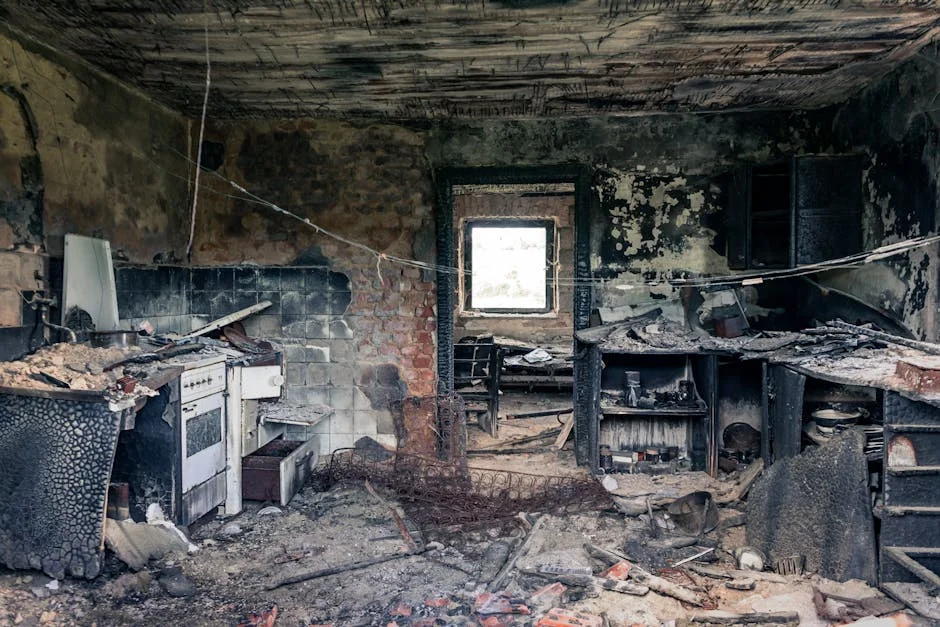
A destructive fire engulfed the Himeville Magistrate’s Court in KwaZulu-Natal, disrupting legal proceedings and raising urgent questions about the economic resilience of the region’s justice infrastructure. The blaze, which broke out during working hours, has forced the temporary suspension of hearings, creating immediate bottlenecks for local businesses and litigants. This incident highlights the fragile state of public buildings in South Africa, where maintenance backlogs and electrical faults frequently threaten operational continuity. Investors and local enterprises are now assessing the financial ripple effects of this disruption, which extends far beyond the immediate smoke and ash.
Immediate Disruption to Local Commerce
The Himeville Magistrate’s Court serves as a critical hub for resolving commercial disputes, civil claims, and criminal cases in the Umhlatuze Local Municipality. When the gavel stops falling, money stops moving. Small and medium-sized enterprises (SMEs) in the area rely on swift judicial intervention to recover debts, enforce contracts, and manage employee relations. The closure means that unpaid invoices may go unenforced, and small claims may sit on desks for weeks rather than days. This delay imposes a direct carrying cost on businesses, effectively taxing their cash flow.
Local shop owners and service providers in Himeville have already reported confusion among customers who depend on court orders for property rentals and small business licenses. The uncertainty creates a micro-economic friction that slows down transaction velocity. For a town where the informal and formal sectors are deeply intertwined, any pause in the legal machinery can lead to a noticeable dip in consumer confidence. Businesses are now factoring in legal delays as a new variable in their quarterly risk assessments.
Financial Impact on SMEs
Small businesses operate on thin margins. A delay in a magistrate’s ruling on a breach of contract can mean the difference between liquidity and insolvency for a local retailer. The Himeville court handles a significant volume of small claims, often valued between R5,000 and R16,000. When these cases are pushed back, the plaintiff’s working capital is tied up. This is not just an administrative inconvenience; it is a direct hit to the balance sheets of local entrepreneurs. Financial advisors in the region are advising clients to review their cash flow projections, accounting for potential judicial lag.
Insurance companies are also beginning to scrutinize the claims process. If the court records are damaged, verifying liability for business interruptions becomes more complex. This could lead to longer settlement times for insurance payouts, further straining the financial health of affected businesses. The market is watching to see if this incident triggers a broader review of how judicial assets are insured and valued in the KwaZulu-Natal province.
Infrastructure Deficits and Economic Risk


The fire at Himeville is not an isolated incident but part of a broader pattern of infrastructure decay in South Africa’s public sector. Aging electrical grids, outdated fire suppression systems, and deferred maintenance have turned courts, schools, and hospitals into potential tinderboxes. For investors looking at the KwaZulu-Natal property and public sector markets, this event serves as a stark warning about the quality of underlying assets. The cost of repairing the Himeville court building will fall on the provincial treasury, diverting funds from other critical economic development projects.
Analysts note that the financial burden extends beyond the immediate repair costs. There is the opportunity cost of delayed justice. When courts are closed, cases spill over into subsequent terms, leading to a backlog that can last for months. This backlog increases the cost of doing business because legal certainty is diminished. Companies may delay expansion plans in Himeville and surrounding areas until they are confident that the legal framework is stable and efficient. This hesitation can slow down local job creation and investment inflows.
The Department of Justice and Constitutional Development has confirmed that a preliminary investigation is underway to determine the cause of the blaze. Early reports suggest an electrical fault, a common culprit in older public buildings across the province. If the wiring is found to be substandard, it could trigger a province-wide audit of court facilities. Such an audit would require significant capital expenditure, potentially impacting the provincial budget and leading to tax adjustments or service fee increases in the future. The market is pricing in this potential fiscal pressure.
Legal Sector Adaptation and Costs
The legal profession in KwaZulu-Natal is now facing the challenge of adapting to the physical disruption. Lawyers and advocates who regularly appear in Himeville are having to adjust their billing structures and client expectations. The court may opt to hold hearings in nearby Durban or Pietermaritzburg, which increases travel and accommodation costs for legal practitioners. These additional expenses are often passed on to clients, increasing the overall cost of litigation. For individuals and small businesses, this means that a simple magisterial case could become more expensive due to the geographic displacement of the proceedings.
Law firms are also evaluating the need for greater digital integration. The fire has underscored the fragility of physical records. If case files are lost or damaged, the cost of reconstructing evidence can be substantial. This incident may accelerate the adoption of digital case management systems in the KwaZulu-Natal division of the High Court and Magistrates’ Courts. Technology providers specializing in legal tech solutions could see increased demand as courts seek to modernize their infrastructure to mitigate future risks. This represents a niche but growing market opportunity within the broader South African technology sector.
The South African Institute of Chartered Accountants (SAICA) may issue guidance on how businesses should account for these unexpected legal costs. They might recommend treating the additional legal fees as an “extraordinary item” or adjusting the provision for doubtful debts. This accounting adjustment will affect the bottom line for companies in the region, influencing their reported profitability and, consequently, their valuation in the eyes of investors. The financial implications of a court fire are thus both direct and indirect, affecting balance sheets across multiple sectors.
Market Sentiment and Investor Reaction
While the Himeville court fire may seem like a local event, its implications resonate with investors who monitor operational risks in emerging markets. The incident adds to the narrative of infrastructure vulnerability in South Africa, which has historically been a key driver of foreign direct investment (FDI). Investors are sensitive to signals of systemic risk, and a fire in a key public institution can trigger a re-evaluation of the stability of the local business environment. This is particularly relevant for sectors that rely heavily on the judicial system, such as real estate, insurance, and retail.
Stock markets in Johannesburg may not see an immediate, dramatic swing based on a single court fire, but sentiment is cumulative. Each incident adds to the perception of operational friction. For long-term investors, this means a higher risk premium may be applied to assets located in KwaZulu-Natal. This could lead to a slight depreciation in property values or an increase in the cost of capital for local businesses. Financial analysts are likely to include this event in their quarterly risk reports, citing it as an example of the “infrastructure tax” that businesses in the region must pay.
The insurance industry is also taking note. Insurers may review their underwriting criteria for public buildings, potentially increasing premiums for courts, schools, and hospitals in areas with similar infrastructure profiles. This cost increase will ultimately be borne by the taxpayer or through increased service delivery fees. The ripple effect of the Himeville fire is thus felt in the boardrooms of insurance companies, the budgets of the provincial government, and the balance sheets of local businesses. It is a reminder that infrastructure is not just a physical asset but a financial one.
Future Steps and Regulatory Watch
The immediate priority for the Department of Justice is to restore operations at the Himeville Magistrate’s Court. This will involve a detailed structural assessment, potential relocation of cases, and the implementation of temporary fire safety measures. The timeline for these steps will be critical in determining the long-term economic impact. A quick resolution will minimize the disruption to local commerce, while a prolonged closure could lead to a more significant backlog and increased legal costs. Investors and businesses will be watching the official statements from the provincial government for clarity on the repair schedule.
Regulators may also use this incident to push for stricter building codes and more frequent audits of public infrastructure. The National Treasury could link infrastructure maintenance to performance bonuses for provincial departments, creating a financial incentive for better asset management. These regulatory changes would have a broader impact on the construction and engineering sectors, potentially boosting demand for contractors and consultants. The Himeville court fire, therefore, serves as a catalyst for potential policy reforms that could reshape the public infrastructure landscape in KwaZulu-Natal. Readers should monitor the upcoming provincial budget announcement for any new allocations aimed at judicial infrastructure.
See Also
- Gauteng's Child Protection Week Exposes Crisis as Vulnerable Children Fall Through the Gaps
- Wife and Accomplice Sentenced to Life for Plotting Husband’s Murder in London
The timeline for these steps will be critical in determining the long-term economic impact. Market Sentiment and Investor Reaction While the Himeville court fire may seem like a local event, its implications resonate with investors who monitor operational risks in emerging markets.
What is the latest news about himeville court fire triggers legal logjam in kzn markets?
Why does this matter for sports?
What are the key facts about himeville court fire triggers legal logjam in kzn markets?