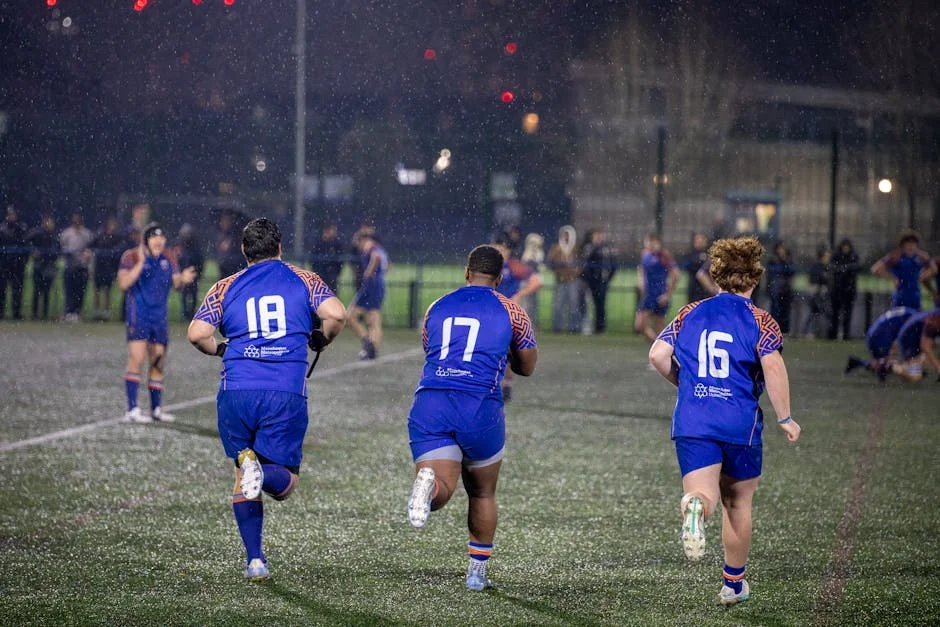
Chris Smith, Evan Roos, and Quan Horn have each secured prestigious awards in the United Rugby Championship, marking a significant moment for South African rugby's presence in the competition. The trio's recognition comes at a time when the tournament's commercial landscape is evolving rapidly, with player accolades increasingly tied to broadcasting deals and sponsorship valuations worth millions.
Three South Africans Claim Top Honours
Chris Smith took home the award for a standout individual performance, while Evan Roos earned recognition for his relentless work at the breakdown and in open play. Quan Horn, the young fly-half who has drawn comparisons to some of the game's most cerebral playmakers, claimed his own slice of the honours list. The three winners represent different facets of what has become a defining relationship between the URC and South Africa's four participating franchises.

The ceremony, held in Cape Town, brought together executives from the league's commercial partners, team directors, and media rights holders. For broadcasters, player awards carry tangible weight. Viewership data shows that matches featuring award-winning players generate higher engagement figures, directly influencing the advertising rates charged during live transmissions.
Why South African Dominance Matters for the URC's Balance Sheet

The URC was relaunched in 2021 when South Africa's four Super Rugby teams — the Bulls, Sharks, Stormers, and Lions — joined the competition alongside Irish, Welsh, Scottish, and Italian franchises. That expansion was a calculated commercial move. The South African market brought an additional television audience, a new base of commercial sponsors, and a competitive edge that has raised the overall standard of the league.
Broadcasting rights for the URC are negotiated across multiple territories. In the United Kingdom, where this competition airs, the deal with BBC Sport and TNT Sports represents a significant revenue stream for the league's central fund. When South African teams perform well and individual players earn recognition, the tournament's appeal to British audiences grows. That translates into higher rights fees at the next negotiation cycle.
The Sponsorship Equation
Corporate sponsors assess the URC's reach partly through player narratives. A headline-grabbing award for a South African player creates marketing opportunities for team sponsors and the league's own commercial partners. Merchandise sales for the Bulls, Sharks, and Stormers have climbed steadily since the URC expansion began, with jersey sales in the United Kingdom accounting for a growing share of that revenue.
Player transfer values also respond to award recognition. A player who wins URC individual honours can command a higher fee if the club decides to sell, or a more lucrative contract renewal if the player stays. For the franchises involved, keeping award-winning talent represents both a sporting and financial imperative.
Quan Horn: The Investment Profile
Among the three winners, Quan Horn has attracted particular attention from a commercial standpoint. Still early in his professional career, Horn represents the kind of asset that clubs build around for the long term. His award signals that the Stormers have developed a homegrown talent pipeline capable of producing players who compete at the highest level.
Sports economists who study rugby note that player development investments in South Africa have historically offered strong returns. The cost of nurturing a player through youth academies and into professional contracts is substantially lower than equivalent pathways in the British Isles, yet the output — measured in international caps and individual accolades — compares favourably.
For investors in professional sport, this dynamic matters. A club that produces award-winning players generates not only on-field success but also balance sheet value. When the Stormers can point to Horn's achievement, they strengthen their position in sponsorship negotiations, season ticket renewals, and broadcast deal discussions.
The Market Reaction to URC Award Announcements
Professional rugby operates within a broader sports economy where performance and recognition feed into commercial outcomes. The URC's member clubs are privately owned or run by consortiums that monitor player valuations closely. When a player like Roos wins an award, his market value typically increases by a figure that industry sources estimate between 10 and 20 percent, depending on the category and the player's existing contract terms.
The Bulls, Sharks, and Stormers all have commercial arrangements with sponsors who track individual honours as part of their return-on-investment assessments. An award season that celebrates South African players sends a signal to those sponsors: the investment in a URC franchise is producing results that resonate beyond the pitch.
For the league's central administration, the commercial logic is straightforward. A competitive, high-profile tournament with memorable individual storylines attracts better broadcasting deals, higher attendance at live events, and more engaged digital audiences. The awards announced this week feed directly into that narrative.
What Happens Next for the URC
The award announcements come at a useful moment for the league. The next broadcast rights cycle for the United Kingdom and Irish markets is approaching, and the URC needs to demonstrate sustained audience growth to command better terms. South African team performances in the knockout stages of the competition will be watched closely by rights holders evaluating whether to increase their bids.
Clubs will also begin their recruitment and retention cycles shortly. An award winner like Chris Smith now enters negotiations with renewed leverage, while the clubs pursuing upgrades to their squads will factor the award results into their scouting priorities. The economics of professional rugby reward performance, and these three players have just demonstrated exactly that.
For fans and commercial observers alike, the honours list provides a useful benchmark. Which teams produced the players who made the biggest impact? Which franchises are developing talent that the broader rugby economy values? The answers to those questions will shape squad strategies, sponsorship decisions, and broadcasting narratives through the rest of the season and into the next contract round.
See Also
- UK Government Exposes Nearly 30 Illegal Waste Sites — Markets Brace for Impact
- Pope Leo Slams AI Slavery — Markets React to Ethical Risk