Japan's government has given the green light to an ambitious maglev expansion plan that economists say could redefine how major economies are integrated. The project aims to link multiple urban centres across the country into a single high-speed corridor supporting what planners call a "megaregion" worth an estimated $2 trillion in combined economic output.
What the plan involves
The proposal centres on extending Japan's existing magnetic levitation network beyond the current Tokyo-Nagoya corridor now under construction. Officials want to connect additional metropolitan areas, creating a continuous ultra-fast transport spine that could eventually stretch from the northern island of Hokkaido to the southern tip of Kyushu. Maglev technology allows trains to travel at speeds exceeding 500 kilometres per hour, roughly double the capability of conventional high-speed rail.
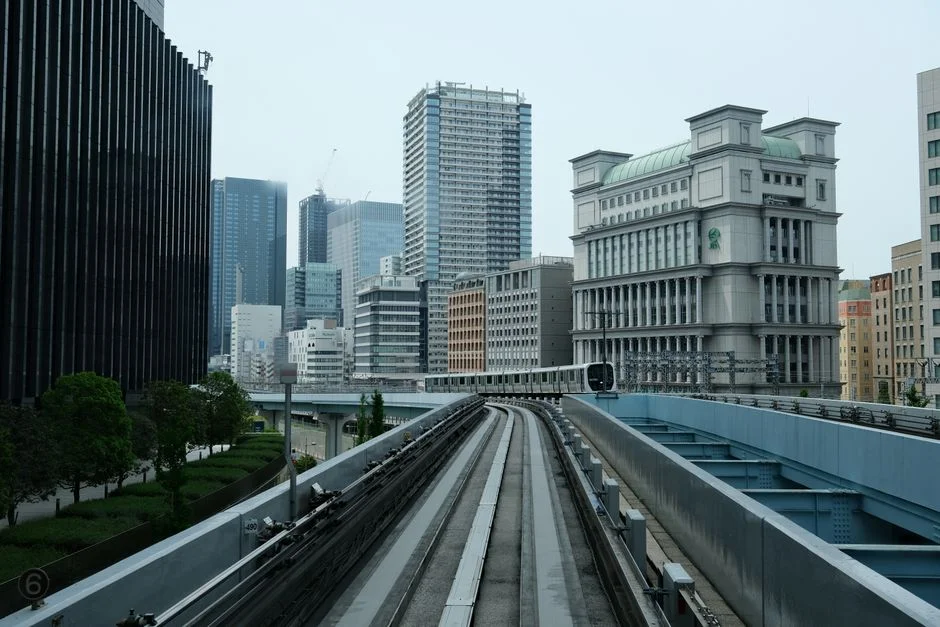
The central government has directed state-backed railway operators to conduct detailed feasibility studies covering route selection, tunnel requirements, and projected passenger volumes. Japan already operates the world's fastest maglev service in trial form, with test runs regularly exceeding 600 km/h. The new plan represents a significant scaling up of those ambitions.
Economic stakes and market implications

The $2 trillion figure attached to the megaregion concept reflects the combined GDP of the cities and prefectures that would fall within the high-speed corridor. Planners argue that reducing travel times between these economic hubs would unlock productivity gains, ease labour market bottlenecks, and attract foreign investment to regions currently considered too remote from major markets.
Financial markets responded with interest to the announcement. Shares in construction firms with experience in tunnel boring rose on the Tokyo exchange following the news. Several engineering companies that have worked on the existing Chuo Shinkansen project saw their valuations climb as analysts began modelling potential contract volumes from an expanded programme.
Investment and funding structure
Government sources indicated the total investment could reach into the tens of billions of pounds equivalent over the construction period, which planners estimate will span several decades. The funding model being considered combines public infrastructure bonds, government-backed lending, and potential private sector participation through build-operate-transfer arrangements.
Central Bank of Japan officials have signalled openness to providing financing support for the project, though no formal commitment has been made public. The scale of investment required means Japan will likely need to sequence construction phases carefully to manage debt sustainability concerns that have weighed on fiscal policy discussions in recent years.
Business reaction and sector impact
Corporate Japan has responded with a mixture of enthusiasm and caution. Manufacturers of precision components used in maglev systems, including firms supplying magnetic coils and guidance electronics, stand to gain substantial long-term contracts. Automotive companies with factories located along potential route corridors expressed concern that land acquisition and construction activity could disrupt logistics operations for several years.
Property developers are already examining development rights around proposed station sites, particularly in mid-sized cities that currently lack high-speed rail access. Real estate analysts in Tokyo noted that improved connectivity could shift property values across the corridor, potentially spreading investment gains beyond the capital region.
Japan's global infrastructure ambitions
The announcement comes as Japan intensifies its efforts to export high-speed rail technology to overseas markets. Japanese consortiums have competed for projects in the United States, India, and several Southeast Asian nations, often facing stiff competition from Chinese state-backed competitors offering attractive financing packages.
Infrastructure analysts suggest the domestic maglev expansion could serve as a demonstration project that strengthens Japan's credibility as a technology partner. By proving the viability of extended maglev networks at home, Japanese companies would have a stronger track record to point to when bidding for international contracts.
Challenges and timeline
Engineering experts have flagged several obstacles standing between the announcement and completed construction. Japan's mountainous terrain requires extensive tunnelling, which drives up costs significantly compared to flatter landscapes. Seismic safety standards add further complexity, given the country's position along the Pacific Ring of Fire.
Environmental assessments for new routes could take years to complete, particularly where alignments pass through protected forest areas or nature reserves. The government has set no firm completion date, instead describing the plan as a multi-generational infrastructure vision rather than an immediate construction commitment.
What happens next
Japan's Ministry of Land, Infrastructure, Transport and Tourism will present detailed route options to cabinet members by the end of the current fiscal year. The decision on which corridors to prioritise for initial development is expected to spark intense lobbying from regional governors and local business groups over the coming months.
International observers will be watching closely for signs that Japan intends to use the project as a platform for overseas technology partnerships. Several countries have expressed interest in ultra-high-speed rail solutions but have hesitated without evidence that the technology can operate reliably at scale. The next eighteen months of planning will determine whether Japan can translate its announcement into contracts that extend its infrastructure influence globally.
See Also
- Venezuela Death Toll Reaches 1,719 as Economic Crisis Deepens
- Gauteng Cracks Down on Hunger Relief Misuse — Shop Shelves Flooded with Aid
Japanese consortiums have competed for projects in the United States, India, and several Southeast Asian nations, often facing stiff competition from Chinese state-backed competitors offering attractive financing packages.Infrastructure analysts suggest the domestic maglev expansion could serve as a demonstration project that strengthens Japan's credibility as a technology partner. Automotive companies with factories located along potential route corridors expressed concern that land acquisition and construction activity could disrupt logistics operations for several years.Property developers are already examining development rights around proposed station sites, particularly in mid-sized cities that currently lack high-speed rail access.