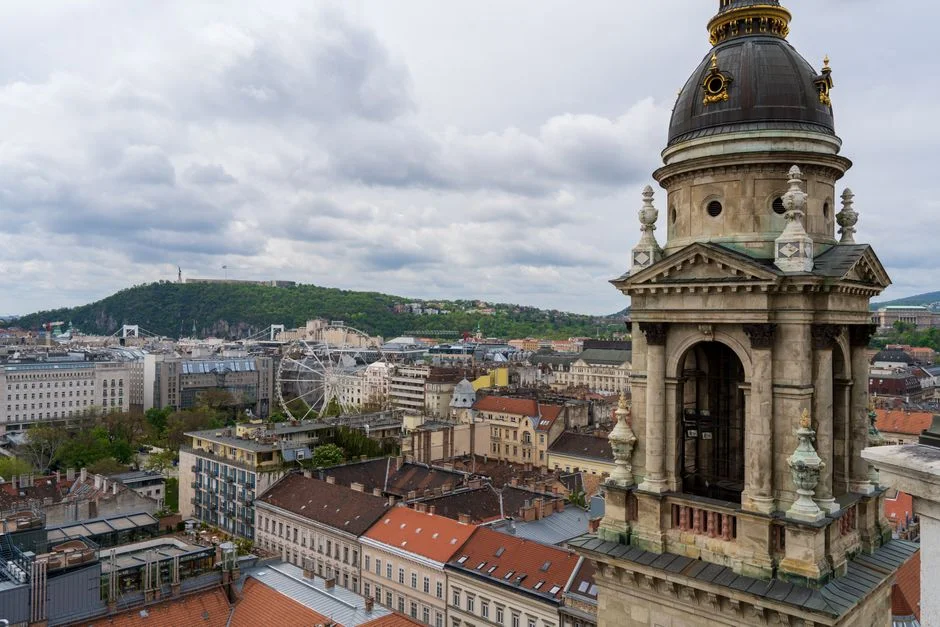
Budapest hosted its first Pride parade in three years on Saturday, an event organisers described as a turning point for Hungary's capital after Viktor Orban's grip on political power loosened. Thousands of participants filled Andrássy Avenue, waving rainbow flags as police kept watch along the route. The gathering marked the first major public celebration of its kind since the former prime minister's influence over Hungarian civic life diminished significantly.
A City Reclaims Its Public Spaces
The parade moved through central Budapest without the restrictions that had become routine in recent years. Vendors lined parts of the route, a sight absent from previous marches that faced official obstruction. The event drew participants from across Hungary and neighbouring countries, including Austria and Slovakia. Organisers put the turnout at roughly 15,000, a figure not seen at a Budapest Pride event since 2021.
For years, Pride marches in Hungary operated under tight constraints. Authorities repeatedly shortened routes, denied permits for central locations, and deployed security forces in ways activists said aimed to discourage participation. Saturday's event unfolded without those obstacles. No permit applications were denied. No route changes were imposed.
Reading the Political Signals


Orban dominated Hungarian politics for fifteen consecutive years, reshaping laws governing media, courts, and civil society along the way. His government passed legislation restricting LGBTQ+ content in schools and required organisations receiving foreign funding to register as foreign agents. European Union officials launched infringement procedures against Hungary repeatedly during this period.
The political shift that enabled Saturday's Pride to proceed freely came after national elections last year. Orban's Fidesz party, which had governed since 2010, lost its parliamentary majority for the first time in over a decade. A new coalition took office and began reversing several of Orban's signature policies within weeks of forming a government. One of its first actions was to scrap the foreign agent law that had targeted civil society groups.
EU Funds Hang in the Balance
During Orban's tenure, Hungary froze billions of euros in EU cohesion funding over rule-of-law concerns. Brussels withheld payment for years, citing democratic backsliding and judicial independence problems. The new government immediately opened negotiations with EU institutions to unlock the frozen funds, with economists estimating the total at approximately 30 billion euros in available structural and recovery payments.
The Pride event carries symbolic weight in these negotiations. EU officials have repeatedly cited the treatment of LGBTQ+ Hungarians as evidence of democratic values slipping in Budapest. A Pride march proceeding freely demonstrates a shift in direction that Brussels will weigh when deciding whether to release suspended funds.
Business Circles Take Notice
Multinational companies with operations in Hungary have watched the political transition closely. Several multinational employers in Budapest had privately expressed frustration in recent years over what they described as a deteriorating environment for recruiting international talent. Restrictions on LGBTQ+ visibility created complications for companies with inclusive workplace policies.
Budapest's technology sector, which employs tens of thousands and accounts for a substantial portion of Hungary's exports, had become particularly vocal about the business costs of political isolation. Job postings from Hungarian firms had begun attracting fewer applications from Western European candidates during the Orban era, recruitment consultants in Vienna told regional media outlets last year.
Saturday's Pride march changes that calculus. International businesses looking to expand operations in Central Europe now face a fundamentally different picture in Hungary than they did twelve months ago. The new government's commitment to judicial reform and its stated intention to restore media freedom address two of the three primary concerns multinational investors flagged in annual surveys conducted by the European Chamber of Commerce.
The Forint and Foreign Investment
Hungary's currency, the forint, strengthened noticeably against the euro in the weeks following the government transition. Market analysts attributed part of the rally to expectations that EU funding would eventually flow to Budapest. The prospect of unlocking billions in cohesion payments boosted sentiment toward Hungarian government bonds, with yields falling to their lowest levels since before the pandemic.
Foreign direct investment figures for Hungary had declined steadily between 2022 and 2024, according to data from the National Bank of Hungary. Manufacturers that once considered Budapest a gateway to Central European markets began redirecting expansion plans to Poland, Romania, and Slovakia. The political shift creates conditions for reversing that trend, though analysts caution that actual investment decisions require sustained policy consistency over months, not weeks.
What Comes Next
Hungary's new government faces its first major test at the local level in October, when Budapest holds municipal elections. The capital's mayor, whoaligns with the new national coalition, has promised to expand public LGBTQ+ programming and update city hiring practices to reflect broader anti-discrimination standards. Whether those commitments translate into lasting change depends partly on whether the national government maintains its reform course.
EU observers will track whether Hungary meets the specific benchmarks Brussels set for releasing frozen funds. The European Commission has outlined milestones related to judicial appointments, anti-corruption measures, and media freedom that Budapest must reach before disbursements resume. A Pride march cannot substitute for concrete legislative action, but the atmosphere in which those reforms will be debated has clearly shifted.
For now, the rainbow flags flying above Budapest's main boulevard mark something genuinely new. Whether it lasts depends on elections in the autumn and negotiations in Brussels through the winter.
See Also
- Tshwane Triggers Eight-Hour Water Outage — Local Businesses Brace for Impact
- Elon Musk Eyes Historic SpaceX-Tesla Combination That Could Reshape Global Markets
The political shift creates conditions for reversing that trend, though analysts caution that actual investment decisions require sustained policy consistency over months, not weeks. The new government's commitment to judicial reform and its stated intention to restore media freedom address two of the three primary concerns multinational investors flagged in annual surveys conducted by the European Chamber of Commerce.