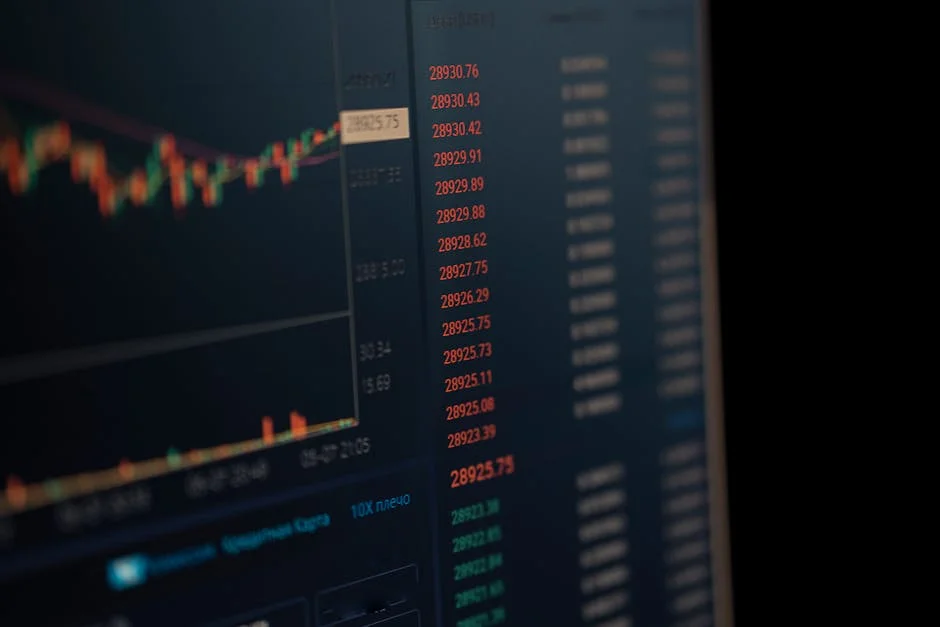
Polymarket data has revealed widespread signs of insider trading in bets concerning Iran, raising urgent questions about market integrity. The New York Times investigation uncovered dozens of trades that appeared to rely on non-public information, shaking investor confidence. This discovery forces a critical examination of how information asymmetry impacts emerging financial instruments.
Polymarket Uncovers Systemic Betting Anomalies
The New York Times reported that dozens of bets on Polymarket showed clear indicators of insider knowledge. These anomalies were particularly concentrated on events related to Iran and its geopolitical stance. The platform’s data suggests that certain users accessed information before it became widely available to the general market.
Polymarket operates as a prediction market where users buy and sell shares in the outcome of real-world events. Unlike traditional stock markets, these platforms rely heavily on the speed of information dissemination. When insiders act on private data, the resulting price movements can distort the true probability of an event occurring.
Investors are now scrutinizing the transparency of these digital exchanges. The revelation that insider trading is prevalent in specific categories like Iran-related bets challenges the assumption that prediction markets are purely democratic. This has immediate implications for how institutional investors might view these assets for hedging purposes.
Market Integrity Faces Serious Challenges


The concept of a fair market relies on all participants having equal access to information. When insiders trade on private data, they create an uneven playing field that disadvantages retail investors. Polymarket’s findings indicate that this problem is not isolated but rather systemic in certain high-stakes categories.
Financial regulators are watching these developments with growing concern. If prediction markets are to serve as reliable indicators of economic or political outcomes, their data must be clean. The presence of insider trading introduces noise that can mislead both individual bettors and algorithmic traders.
Businesses that use prediction markets for strategic forecasting now face new risks. If the underlying data is skewed by insider activity, corporate decisions based on these predictions could be flawed. This creates a ripple effect that extends far beyond the immediate betting community into broader economic planning.
Iran-Related Bets Under Microscope
The investigation highlighted Iran as a key area where insider trading was most evident. Geopolitical events involving Iran often involve complex diplomatic maneuvers and sudden policy shifts. These characteristics make the market susceptible to those with access to real-time diplomatic or intelligence updates.
Traders who monitored Iran-specific contracts found that prices often moved sharply before official announcements. This pattern suggests that information was leaking from government or corporate sources directly to market participants. The speed at which these bets were placed further supports the theory of coordinated insider activity.
For the UK and other Western economies, Iran remains a critical geopolitical player. Any distortion in markets tracking Iranian stability or policy could have broader economic implications. Investors in London and New York need to understand how these localized inefficiencies might affect global risk assessments.
Geopolitical Data Distortions
The distortion of data in Iran-related bets is not just a local issue. Global markets are interconnected, and signals from prediction markets can influence currency and commodity prices. If the signal from Polymarket is noisy due to insider trading, it can lead to mispricing in related assets.
Analysts in London are particularly attentive to how Middle Eastern stability affects oil prices and supply chains. If prediction markets fail to accurately reflect the probability of Iranian policy changes, energy traders may make suboptimal decisions. This highlights the broader economic stakes involved in maintaining market integrity.
Investor Confidence Takes a Hit
Retail investors are the backbone of many prediction markets. When they perceive that the game is rigged, participation can drop significantly. The Polymarket findings threaten to erode the trust that has been carefully built over years of successful predictions and payouts.
Institutional investors are also beginning to take notice. Firms that allocate capital based on alternative data sources are now questioning the reliability of prediction market data. This skepticism could lead to a temporary freeze in investment flows into these platforms.
The financial impact could be substantial if confidence wanes. Lower liquidity means wider spreads and more volatile prices, which in turn makes the market less attractive. This creates a negative feedback loop that could stall the growth of the entire prediction market sector.
Regulatory Response Remains Uncertain
Regulators are still grappling with how to classify and oversee prediction markets. Unlike traditional exchanges, platforms like Polymarket often operate in a regulatory gray area. The recent findings may accelerate calls for stricter oversight and clearer definitions of insider information.
The UK’s Financial Conduct Authority (FCA) is one of the bodies watching this space closely. If prediction markets are deemed to be significant enough, they could face similar rules to those governing derivatives or even equities. This would impose higher compliance costs on platforms but could also enhance their credibility.
Global coordination will be essential for effective regulation. Since prediction markets are inherently digital and borderless, a patchwork of national rules could create confusion. The Polymarket case may serve as a catalyst for international discussions on how to standardize market integrity standards.
Business Implications for Market Participants
Companies that rely on prediction markets for risk management must adapt their strategies. They can no longer take market prices at face value without conducting deeper due diligence. This means investing in data analytics to filter out potential insider-driven noise.
Hedge funds and proprietary trading firms are likely to adjust their algorithms. These firms often use prediction market data as a leading indicator for broader economic trends. If the data is skewed, their models will need to incorporate new variables to account for potential insider influence.
For smaller businesses, the barrier to entry might increase. If regulation leads to higher costs for platforms, these costs may be passed on to users. This could limit access to these valuable informational tools for smaller players, potentially widening the gap between institutional and retail participants.
Future of Prediction Markets Hangs in Balance
The revelation of insider trading on Polymarket is a wake-up call for the industry. It exposes the vulnerabilities of a market structure that relies heavily on information speed and accuracy. Addressing these issues will be crucial for the long-term viability of prediction markets as financial instruments.
Platforms must implement stronger safeguards to detect and deter insider trading. This could include stricter verification processes for users, more transparent reporting of large trades, and even technological solutions like blockchain to enhance data immutability. Without these measures, trust will continue to erode.
Investors should remain cautious and diversified. While prediction markets offer unique insights, they are not without their flaws. Understanding the specific risks associated with different categories, such as the Iran-related bets highlighted in the New York Times report, is essential for making informed decisions.
What to Watch Next
The coming months will be critical for Polymarket and the broader prediction market sector. Investors should watch for regulatory announcements from key bodies like the FCA in the UK and the SEC in the US. These decisions will shape the future landscape of digital betting and forecasting.
Market participants should also monitor changes in trading volumes and liquidity. A drop in activity could signal waning confidence, while a surge might indicate that the market has stabilized. Keeping an eye on these metrics will provide early warnings of broader shifts in investor sentiment.
Finally, the outcome of any legal or regulatory actions against identified insiders will set important precedents. These cases will define what constitutes insider trading in the digital age and how strictly it will be enforced. The results will have far-reaching implications for market integrity globally.
See Also
- Limpopo Healthcare Crisis Deepens as ANC Leaders Face Harsh Opposition Criticism
- Colombians Head to Polls Sunday as Petro Ally Battles Pro-Trump Rivals
What is the latest news about polymarket data exposes insider trading surge on iran bets?
Why does this matter for world-news?
What are the key facts about polymarket data exposes insider trading surge on iran bets?